

We’ve never seen anything quite like the assault on services and protections for older people, people with disabilities, and their caregivers that is under way right now. These services benefit all of us by ensuring that we can live well and age with the dignity we all deserve.
The proposed $880 billion cuts to Medicaid (known as Medi-Cal in California) that are being considered by Congress constitute a betrayal of millions of Californians, including 1.6 million older adults.
The U.S. Department of Agriculture (USDA) has already terminated programs to help food banks and school meal programs buy food from local farmers. USDA deliveries to food banks have been canceled. Huge proposed cuts to SNAP — the food security program previously known as food stamps — will make it harder for participants, including the 5 million in California, to keep food on the table. Federal funds that support Meals on Wheels are also under threat.
The list goes on. The Administration for Community Living (ACL) is the main federal governmental advocate for older people and people with disabilities, and also oversees the Older Americans Act. It is part of the Department of Health and Human Services, which just announced a “restructuring” that will dissolve ACL.
Social Security watchdogs are concerned that layoffs and closing regional offices will make access harder for older people and people with disabilities.
For older adults, their caregivers, and people with disabilities, these cuts would strip away essential services. They — and the resulting pain — would not be distributed equally. They would disproportionately hurt persons from marginalized communities across the state. Let’s be clear: “reform” is a smokescreen for cuts that threaten the basic needs of older adults.
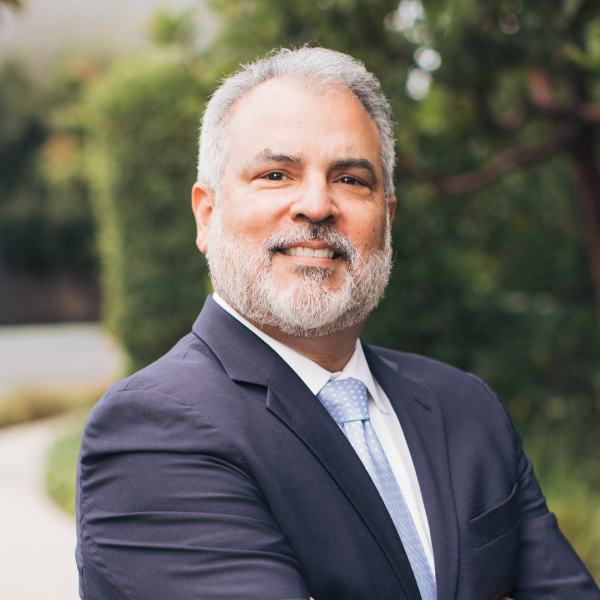
I have witnessed firsthand the transformative impact of these programs, both in my current role as President and CEO of Archstone Foundation, and when I was CEO of St. Barnabas Senior Services — the oldest senior service agency in Los Angeles. I also know on a personal and professional level how critically important it is for so many older adults to receive their Social Security checks on time to cover their basic needs.
Most of our clients at St. Barnabas relied on Social Security, Medicare, and Medi-Cal. After paying for food and rent, there wasn’t much left for other expenses. They trusted Medicare and Medi-Cal with their health — even their survival. So I cannot sit back and watch as critical help is wrenched away from our most vulnerable community members.
Medi-Cal Is a Lifeline
Medi-Cal must be protected because it is a lifeline for 40 percent of Californians.
It pays for more than half of all nursing home stays in California.
For older beneficiaries, Medi-Cal enhances dignity and quality of life by providing needed services, like help with bathing, dressing, toileting, meals, and grocery shopping. This helps many delay or avoid moving to expensive institutional care, like a nursing home. Plus, we know people prefer to stay in their homes and communities. Medi-Cal helps ensure they can.
"These threats have caused tremendous anxiety in our older adults,” says Sherry Nadworny, Director of Development and Community Relations at Meals on Wheels Diablo Region, an Archstone Foundation grantee. “We’ve had many calls from people in tears, worrying if they would have food. Talk of disruption can cause anxiety in anyone, but it is very pronounced for someone in their 80s, 90s, or sometimes 100, who see us as the safety net allowing them to remain nourished and independent.”
For people living with chronic conditions or disabilities, Medi-Cal covers specialized care at home, like help with injections, and bowel, colostomy, and wound care. For persons with dementia living in the community, Medi-Cal allows them to find comfort in adult day services.
For California’s approximately 4.7 million unpaid family caregivers, Medi-Cal provides support through respite care, training, and financial assistance, alleviating some burdens. In the words of Patricia, whose mother receives care at an adult day program through Alzheimer’s Orange County, “the impact [of joining the program] was immediate — my mom has a safe, supportive space to thrive, and I gained peace of mind. Just a few months of care have felt like years, that’s what makes me thrive.”
Medi-Cal helps fill critical gaps for vision, dental, hearing, and long-term care. And for people who are eligible for both Medicare (because they are 65 or older) and Medi-Cal (because they meet the income requirements), sometimes called dual eligibles, Medi-Cal helps them afford their Medicare premiums and meet out-of-pocket costs. This helps keep people healthy, which is why, across the aging network, people are declaring that “a cut to Medicaid is a cut to Medicare.”
Cuts Are Both Harmful and Unpopular
Eight Republican members of the Congressional Hispanic Caucus have already sent a letter to Republican leaders saying that, “slashing Medicaid would have serious consequences, particularly in rural and predominantly Hispanic communities where hospitals and nursing homes are already struggling to keep their doors open.”
Over half (51.5%) of Medi-Cal recipients are Latino/Hispanic. The residents in places like Kings, Kern, and Tulare counties, in California’s 22nd Congressional District, are majority Hispanic. The 22nd district also has the second-highest Medicaid enrollment in the nation. Its Republican Congressman, David Valadao, signed the letter opposing cuts, but worried Californians continue to speak up. In this tight contest, every Congressional vote will count.
Taking Action
Protecting Medi-Cal is a human issue, not just a political debate. But regardless of political affiliation, most Californians support Medi-Cal as it is, and only 13 percent support cutting it.
Here’s what you can do:
- Call, write, and meet with your Member of Congress to share your story and demand protection for Medicaid. (Find contacts here.) Participate in the April 3rd Protect Medicaid Senate Call-In Day — get the toolkit here.
- Stay informed and engage in community advocacy. We’ve gathered some useful resources here.
We cannot afford to remain silent. Early in my career, I worked in Washington as a staffer for the House Select Committee on Aging. I saw firsthand the powerful influence our calls have in Congress. We must hold our policymakers accountable to protect older adults, people with disabilities, caregivers, and underserved communities from this betrayal. Millions of lives and our collective future depend on it.
Read Rigo’s last piece, Standing Firm in Our Commitment to Justice, Equity, Diversity, and Inclusion.


Comments
Well said, Rigo!
I appreciate your leadership in supporting our older adults as they manage through this uncertainty - and your support as providers who look at options to take on the heavy lift to manage the missing pieces and provide engagement, and connectedness to support the personal health and wellbeing of this community. As a community we will ensure everyone's voice is heard.
Thank you,
Joe
Although I was middle class most of my life, working primarily as a planner for local and state agencies serving older people, some bad financial choices have left me dependent on programs such as Medical, Section 8, food stamps, and payments for Medicare premiums and copays; So like others in my position, i am very concerned. How our country can let a bunch of 20 something male otherwise known as DOGEs run riot in government agencies slashing and burning much needed programs is beyond my comprehension. I can only hope that congresspeople like the Latino Republicans mentioned will finally put their feet down and say STOP! if only because these cuts will be a disaster for their constituents.
Laura and John, thank you for sharing your thoughts and adding your voice to this critical issue. I agree that listening is key—understanding real-life experiences helps us advocate more effectively for these programs that benefit all of us as we age. We must continue working together to raise awareness and mobilize action to protect these vital services. Your engagement is invaluable. Let’s keep pushing forward.
I have spent my entire career working directly for the Health Plan and Hospital Organizations. We need better systems in place and are suffering from the blatant lack of support and understanding from legislation and the organizations that they assume are providing the supportive programs through their MediCal and Social Services. I'm a Registered Nurse but also a Certified Case Manager that has seen "boots on the ground" the flagrant mismanagement of these programs.I have also worked as a DHCS CMT (Certified Master Trainer) #1 Everyday MediCal patients get disabilities from traumatic medical and mental conditions. We have no oversight nor efforts to start the process that these individuals apply for SSDI. If they received this they would get MediCare. #2 Everyday we have people enrolled into MediCal but get zero engagement from their MCO or PCP to ensure that they understand and participate in a manage care "process" to learn about their benefits and preventive treatments that they should access. We have allowed the MCO "claim that they make 3 attempts to contact" but still have never closed that gap. We know that most people would want to get labs, see a PCP and actually "Feel Supported" Yet we mail them insurance cards and they have never heard of that PCP nor have ever been able to call that phone number and make an appointment. We need to stop funding LA Care and other MCO that do NOT build hospitals and clinics to provide access to care.
Doug, thank you for your comment and for following our Point of View blog. At Archstone Foundation, we have a vision of a system of care that is accessible to all and that is capable of providing care that meets the needs of older adults in California.
Well done Rigo,
You've clearly identified the terrible threats that current Administration policies pose for older adults and people with Disabilities.
Thank you for telling it like it is. In addition to a betrayal, it also feels like an assault on the most vulnerable members of our society. All of us can speak up, whether it's in the form of writing letters, making calls, or protesting. And, in addition, all of us can listen (really listen) to the opinions of those with whom we may disagree; there's a lot to learn from all sides.