

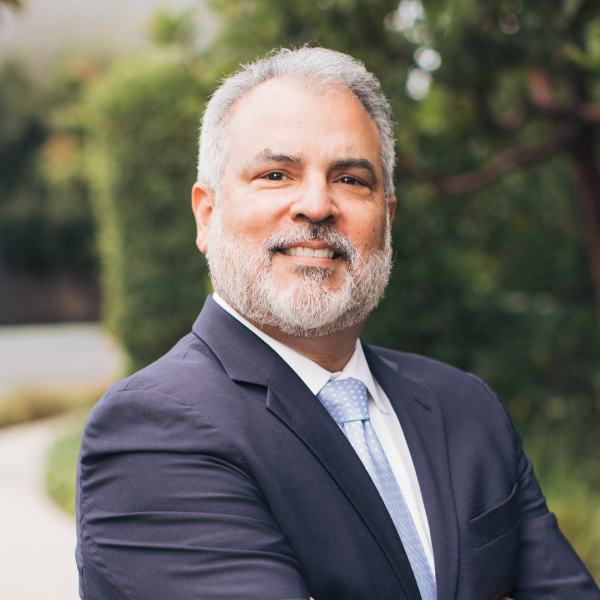
On January 20, 2025, I had the honor of stepping into the role of President and CEO of Archstone Foundation. This date holds national significance, marking a time of reflection on the legacy of Martin Luther King, Jr. and his work for civil rights in our country. It was also the moment when the new administration began to actively challenge federal programs and policies focused on diversity, equity, and inclusion or DEI.
Addressing health and social disparities and ensuring that all older adults have access to person-centered care is deeply personal. The importance of this work reinforces why Archstone Foundation’s commitment to equity in philanthropy must remain steadfast, and why it’s more important than ever to share our commitment with you.
As our Interim President and CEO John Feather last year wrote so powerfully in his blog, Why Centering Equity in Philanthropy Matters More Than Ever, we must recognize these disparities and confront them head-on. These words inspired me as I prepared for my new role. At Archstone Foundation, we see justice, as well as diversity, equity, and inclusion not as abstract ideals, but as core values that inform everything we do. They shape our mission, drive our funding strategies, and strengthen our partnerships. Equity is fundamental to ensuring all older adults and caregivers receive the support, resources, and dignity they deserve.
The strategic and practical value of justice, equity, diversity and inclusion
Throughout my career, I have witnessed the profound impact that structural inequities have on older adults, particularly those from historically marginalized communities. I have seen how systems of care too often leave behind those who most need support. And I have also seen the power of equity-focused programs to create meaningful change.
Uplifting voices of those who are too often overlooked
For 13 years, I saw the power and possibility of these ideas while serving as CEO of St. Barnabas Senior Services in Los Angeles. I witnessed firsthand how the voices of older adults from surrounding communities were frequently overlooked in healthcare and decision-making spaces. As a result, care plans, programs, and policies often failed to reflect their unique needs, wants, and preferences. To address this, we launched an advocacy training program designed to empower these older adults with the skills and confidence to engage effectively in conversations that directly affected their well-being. By equipping them to advocate for themselves and their communities, we worked to ensure that their perspectives were not only heard but meaningfully incorporated into decisions shaping their care, programming, and health.
Embedding care in the community
In an earlier role working with the former California State Department of Mental Health Caregiver Resource Center program, I saw the power of placing equity at the heart of the center’s work. This showed up in important ways, large and small. During my time there, we successfully partnered with the state legislature to secure funding that allowed the center to expand its reach into marginalized communities. This critical investment made it possible to establish local offices, ensuring that essential services were much more accessible. Before this expansion, the program was only available in one place, remote from many people in the larger Los Angeles County who needed caregiver services. It was inconvenient and often discouraging for many. By bringing resources directly to the communities that needed them most, we fostered greater equity in access to care.
These kinds of experiences, and an abiding conviction that all people should be treated fairly and equally, have shaped my leadership. They have reaffirmed my belief that philanthropy must not only center equity and justice but work proactively to address systemic inequities. As we navigate this challenging moment, I want to make it clear: Archstone Foundation remains unequivocally committed to these core values and to this critically needed work.
Navigating an evolving landscape
We recognize the complexities and challenges that many of our grantees and partners are facing, especially as national debates around DEI persist and many federal DEI programs are threatened or shuttered. At Archstone Foundation, we are closely monitoring policy developments and their impact on the communities most care about and the programs we support. We have begun to reach out to assess needs, share insights, and strategize about the best path forward.
Internally, we are also taking a close look at our own policies and practices to ensure that justice, equity, diversity and inclusion continue to be centered in our mission, vision, and daily work. This includes reviewing how we approach grantmaking, how we support our partners, and how we operate as an organization. We know that equity is not just about what we fund, it’s about how we work and who we engage along the way. This is an ongoing process of learning and reflection that we hope to take together with you.
Moving forward, together
As I step into this role in this moment, I do so with deep respect for the legacy of Archstone Foundation and the incredible work of our grantees and partners. I also step in with a profound sense of responsibility—to ensure that our funding decisions are equitable, that our partnerships are inclusive, and that our actions reflect the values we espouse.
We invite you to join us in this commitment. Together, we will navigate these challenges and ensure that our shared values remain a cornerstone of our collective mission. Our vision remains clear: a future where every older adult—regardless of race, ethnicity, income, gender, sexual orientation, or ability—has access to the care and support they need to thrive.
Thank you for your partnership, your dedication, and for joining us in this unwavering commitment to equity.


Comments
Thank you for your committment to DEIA initiatives. More importantly, thank you for being brave in discussing Archstone Foundation’s commitment to DEIA publicly.
Great job!