This year’s unsettled economy and upsetting policy changes have made life much more difficult for older adults especially, particularly those from marginalized communities. These new and acute challenges have prompted Archstone Foundation to do some urgent, fresh thinking about how we can best support older adults in California and the organizations that exist to support them.
One realization, described compellingly by three of my colleagues earlier this month, is that we can and should do more to bolster the adaptability and resilience of our grantee partners to carry out their missions.
Another conclusion is that we must intensify efforts to act alongside the communities we serve so they can advocate on their own behalf. We need to shift our approach to social change toward one that addresses root causes through community-led action.
This is fundamentally different from the traditional approach foundations take to making social change for good. Instead of doing things for communities or on behalf of communities, it means working with them. It starts with recognizing those most affected by our state’s challenges are also the ones best positioned to design and drive the solutions. So, in addition to asking for input from community members and the organizations who serve them, we must act in ways that place our trust in the wisdom, creativity, and power of the communities we serve. This places them as the architects of the changes to health care and social services needed to create the equitable, just systems they deserve. Because ultimately, sustainable change can only come from the people who will live with its consequences every day.
This work requires an important shift in how we view power and expertise. Funders, researchers, and policymakers do not hold a monopoly on either. The experience of the people and their community leaders is a form of expertise that cannot be replicated in academic studies or policy papers. Instead, community voices are often the most powerful forces of change.
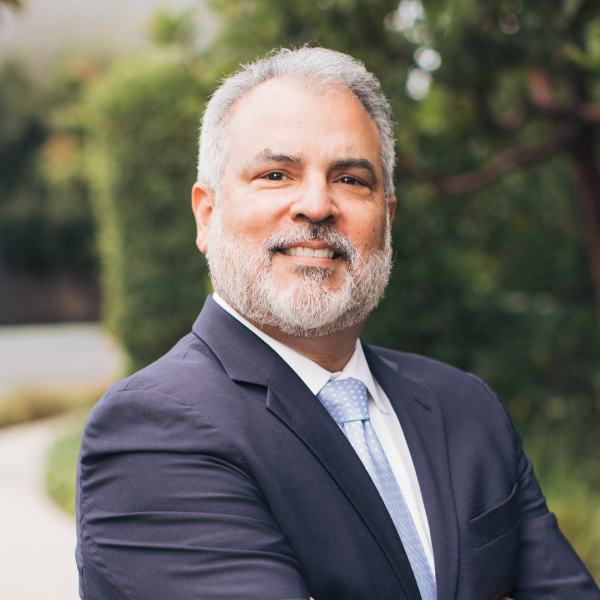
My own experience informs this point of view. For 13 years as Chief Executive Officer of St. Barnabas Senior Services in Los Angeles, I helped organize a community-led coalition that preserved the City of Los Angeles Department of Aging during a municipal and state budget crisis.
In my view, community-led action now exists on a broad continuum. On one end, organizations ignore or fail to prioritize community involvement. At the other, groups genuinely share decision-making authority, involve community members in governance, and let community priorities drive programming. These organizations don't necessarily have written protocols for community leadership. Instead, they are proactively attentive to power-sharing, constantly asking: Who's at the table when decisions are made? Whose voices are at the center? How are we ensuring community members have real agency?
Archstone Foundation is becoming such an organization, confident in the potential for community-led action to spur systemic improvements for older adults so they have greater access to quality healthcare and social services. Funding the programs of individual organizations, in isolation, will not get that job done. That will only happen when we act humbly, in partnership with older people, to enhance their collective power and become their own change agents – combining their lived-experience, ingenuity, and sheer numbers to address root causes rather than just symptoms, generating better policies that will allow them to live better lives.
To do that we need to invest in the infrastructure that allows communities to mobilize effectively. By improving communications skills, providing issue and advocacy training, and supporting grassroots organizing, we can create platforms where older adults can be seen and heard as much more than passive recipients of services. Instead, they can act as their own ambassadors in educating government and business decisionmakers about the challenges they face and the solutions they want.
Make no mistake: This is aspirational. Creating a community-led culture will require long-term commitments of resources and a new collective mindset. It will require us to be comfortable with a certain degree of messiness and uncertainty in the form of competing voices, longer and more complex decision-making timelines, and outcomes that may look different from initially envisioned. It will require genuine humility, to see ourselves as partners rather than leaders. Finally, it will require all involved to recognize that community-led doesn't mean community-only. The most effective path to a better California for older adults—for all of us—will combine grassroots leadership with strategic partnerships, peer learning, and resource mobilization from allies across sectors.
The results should speak for themselves. As the federal government moves to curb access to critical health and social programs, communities of older adults equipped with the best information and advocacy skills are the ideal people to lead us in detailing the challenges we are facing in California and, more importantly, to guide us toward solutions that make true improvements for all of us.