
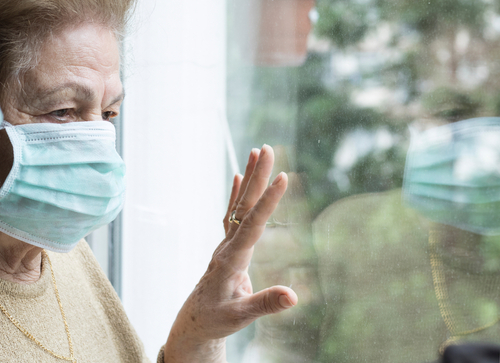
There are so many things that we don’t know about COVID-19, that it can obscure what we do know, notably that the group of people at highest risk of death is those living in long-term care facilities, nursing homes most especially. We must allocate more resources and more effort to *prevent* the spread of COVID-19 among this population because available treatments are not effective, and the outcome is so likely to be death. People in nursing homes are dying in remarkable numbers and it is immoral, if not criminal, not to do everything we can to save their lives and prevent our parents and grandparents from unnecessarily dying an agonizing death.
Nursing homes and, to a lesser extent, other kinds of long-term care facilities (e.g., assisted living, life-care, continuing care retirement communities, etc.) have several common issues that make them places where very vulnerable people are way too likely to be infected with the coronavirus. They are congregate-living environments, where many people live in close proximity. For example, in nursing homes, multiple residents typically share a room, and many such rooms share common hallways. Most such facilities have common dining areas. And even if common areas have been closed, meals must be delivered, and many other daily life activities must be performed “hands on” for residents, such as toileting, bathing, dressing, etc. Finally, most people living in long-term skilled nursing facilities have some level of dementia, making them unable to follow self-care advice such as “not touching your face” or “covering your cough.”
Many of us may be able to stay safely at home, only emerging for brief grocery runs. But long-term care facilities are places where the residents cannot “socially distance” from others and survive. This makes training and protective equipment essential for facility staff caring for residents, or else the staff and the residents will pass the disease back and forth.
Oddly in the crisis, regulators have lowered the various required staff-to-resident ratios. This may reflect realism, as it would be impossible to shut facilities down because their workforce is out sick. It may also be beneficial in that it may dissuade workers from coming to work sick. However, it is quite paradoxical as it takes more time, and therefore staff, to do needed direct care work while using PPE and changing, washing, and preparing between each resident. Moreover, if dining commons are closed, there is new work such as delivering meals individually and clearing dishes. And all of this assumes that adequate supplies of protective equipment are available, and in many places, we know they are not.
Finally, in many states there are policy issues that need to be addressed. In hot spot states like New York, regulators are still requiring nursing homes to take COVID-positive residents back when discharged from the hospital. This means that people who are known to be infectious are being returned to places where there is little or no capacity to prevent the spread of the disease from resident to resident, resident to staff, and then staff to residents.
In California, nursing homes are not required to take COVID-positive residents back from the hospital, but they are encouraged to do so providing that physical spaces and other systems are in place to prevent the spread of the infection to COVID-negative residents. That said, nobody knows how well nursing homes are able to put those physical and practice changes into place, especially while short staffed.
While there may very well be deep systemic changes needed in long-term care settings, for now the answer is not punitive fines or just the “shocked, shocked” response of finding older adults dead in nursing homes around the country. Rather, we must ensure that the long-term care system has the resources, money, staffing, leadership, and protective equipment to ensure that they can prevent the exposure of uninfected people by infected people. Some buildings or facilities will need to be designated as COVID-positive, and residents will need the best care possible, including hospital care and even ICU resources, where there is hope for recovery and such treatment is compatible with personal goals and palliative care and hospice where that is the preference. Other buildings or facilities need to be vigorously defended to keep COVID-19 from infecting this vulnerable population. Rapid, repeated testing, for active virus and antibodies will be needed to help keep the infected, the uninfected, and the (probable) immune, appropriately sorted.
To support these changes, only the federal government can provide the resources needed. I have proposed that increasing payment for all nursing home residents from Medicaid rates to the higher Medicare rates (without copays) would be a start. It would pump needed money for staff and materials into the sector and it would take the burden of these Medicaid costs off state governments.
However, while we wait for a sensible national approach, Archstone Foundation is developing grants, including with LeadingAGE California, to try to address some of these needs to prevent the spread of COVID-19 among nursing home residents. If there is an investment that will allow funders to save more lives per dollar spent, I do not know what it could possibly be. I hope that others will join us in our efforts.


Comments
Nursing homes have long been a petri dish for the latest wave of contagions such as the perenneal flu. Early in my nursing career as a Registered Nurse, I worked weekends in a nursing home during graduate school days. While that was many years ago, the inadequate staffing levels and lack of trained direct care givers has not changes. The COVID-19 pandemic has torn off the covers of long standing health and economic inequities for black and brown communities, the elderly and the poor. I am glad Archstone Foundation is shining light on the crisis and raising the level of awareness to a call for action.
S. Orlene Grant, RN, MSN President & CEO Juaunita C. Grant Foundation
Chris:
Your comments are very refreshing. They are in alignment with the work we are doing at Living Solutions. Visit our website: http://www.ppodsolution.com
I would enjoy visiting with you about our new senior housing option.
Mark
Mark Hunter
Living Solutions
Aton, Wyoming 83110
307-887-9999
mark@ppodsolutions.com
http://www.ppodsolutions.com
I am thrilled that Archstone Foundation is dedicating resources to address the COVID-19 crisis in nursing homes. Thank you for all you do.
Thank you for calling our attention to the effect of this terrible crisis on long-term care. The current pandemic is shining a light on a situation that has been ignored by most of us for too long. Nursing homes and congregate living facilities in the US and even in other highly developed countries with well functioning health and public health systems are struggling with this crisis and there are no easy answers. Increasing the financial support for underresourced facilities to help them do the important work of protecting their residents and their staff are an important first step. My thoughts are with the many families have lost loved ones, with families worried about their loved ones, and with the staff who come back to work in these facilities day after day. They are heroes and I hope we can show our appreciation by giving them the financial and the emotional support they deserve.