
California’s 10-year Master Plan for Aging approaches its four-year mark this January, and we are in the thick of it: The novelty has worn off and those working to realize its five bold goals continue to daringly climb a steep cliff.
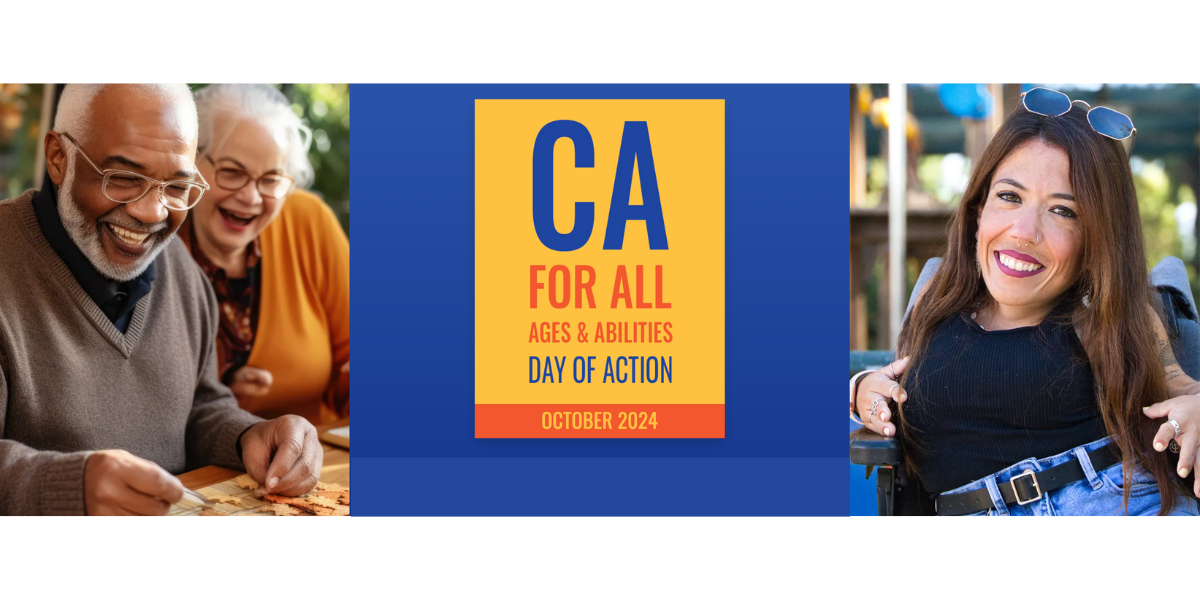
On Oct. 8 the Archstone Foundation team headed to Sacramento for the CA for ALL Ages & Abilities: 2024 Master Plan for Aging Day of Action, which brought together consumers, aging and disability leaders, and policymakers to renew their commitments to working to solve the current and future systems-level problems confronting older adults, people with disabilities, and caregivers.
Here are some takeaways from the day.
The Energy is Even Higher
All 500 seats in the convention center ballroom were filled, and another 1,000 were watching online, as we heard from many stakeholders and policymakers who have joined us since the last day of action, two years ago.
They included an enthusiastic U.S. Health and Human Services Secretary Xavier Becerra; state Senate President Pro Tempore Mike McGuire, who lifted our spirits with strong support for aging issues; and Kim McCoy Wade, Gov. Gavin Newsom’s senior advisor on aging, disability and Alzheimer’s, who provided the celebration some backbone by reminding us how much has been accomplished since the Master Plan took effect:
- Expansion of Medi-Cal to cover undocumented Californians older than 50, resulting in 364,000 additional older people receiving health care coverage through the state’s Medicaid program.
- Gradual elimination of the Medi-Cal asset test.
- Implementation of CalAIM, including the creation of the new enhanced care management and community supports benefits.
- Development of the Long-Term Services and Supports Dashboard and the Data Dashboard for Aging.
- Investment of more than $1 billion, through the Department of Social Services’ Community Care Expansion program, to acquire, construct, or rehabilitate 48 housing projects for low-income older people in 34 of the state’s 58 counties.
- Spending of $70 million to improve older adult behavioral health and passage of the Behavioral Health Services Act
- Investment in training and stipend programs to support the older workforce, including CalGrows and Caring4Cal.
- Expansion of the CalFresh program so 992,000 more older people and those with disabilities receive Supplemental Security Income (SSI)/ State Supplementary Payments (SSP) cash assistance.
Many of those in attendance appreciated the reminder that we have made progress – and the lively natural coalition building that happened during the breaks lifted our spirits.
We Need to Narrow In
Complex problems often require complex solutions, as evidenced by the Department of Aging’s hefty implementation tracker and data dashboard. The challenges continue to outpace us, despite our strong efforts, pushing advocates to become narrower and more strategic in what we are asking for, and when.
These consensus views emerged from three stakeholder advisory committees:
Financing Long-Term Services & Supports
Access to affordable Long-Term Services & Supports (LTSS) is a top priority for older people, people with disabilities, and their families – and so the state should prioritize identifying a sustainable financing mechanism to pay for these benefits. Some years the state has ample revenue and others see a big shortfall, but the need for LTSS will only grow as the population ages. And the vast majority of Californians have no way to pay for these themselves. Without a funding stream, we will never see the scale of investment needed for an equitable long-term benefits system.
Share of Cost Reform & Waiver Improvement
The system now has policy barriers that inequitably limit access to affordable services and supports. What Medi-Cal will pay requires older and disabled people to live below the poverty level – on $600 a month – if they want long-term services and health care. Reforming this would be one of the most impactful ways to increase their access to services and make their health care more affordable. The geographic barriers of the Assisted Living Waiver and the slot limitations in that program as well as the Home and Community Based Alternatives Waiver significantly limit the number who may access these community-based options and otherwise risk institutionalization.
Preventing, Then Ending Homelessness Among Older Adults
Those older than 50 are the fastest growing age group among California’s homeless and are almost half the homeless population, a surge driven by unsustainably high rents and an inadequate supply of affordable, accessible, and stable housing in many areas. The state should create a targeted shallow rent subsidy program for older people and those with disabilities, providing the sort of long-term support that has proven to be one of one of the most effective ways to prevent homelessness.
Stories to Support a Movement
“If we don’t hear the stories, we won’t get the policies,” Becerra declared during his keynote remarks, and that rang true the rest of the day as we heard from several voices in the community.
Elaine Samuels, a licensed vocational nurse for 44 years, described facing homelessness and hopelessness after retiring – before being plugged into the Booker T. Washington Community Service Center in San Francisco. Aili Kato shared his experiences caregiving for his mother’s closest friend, a touching and sobering reminder of the ways in which we overlook caregivers. And Priscilla Yeung told her journey of developing a disability, then creating a way to help older people with vision loss remain independent through training, tools, mentorship, and a supportive community.
Archstone Foundation holds the view that it is best to seek relevant expertise from the communities we serve. We are proud to have supported an event that breathed new life into the still much-needed Master Plan for Aging. And we will continue to partner with government, philanthropy, and all stakeholders who want to improve the health and well-being of older Californians.
Thank you to our fellow philanthropic partners that supported the 2024 Master Plan for Aging Day of Action: May and Stanley Smith Charitable Trust, Metta Fund, The Rosalinde and Arthur Gilbert Foundation, The SCAN Foundation, and planning partner California Collaborative for Long-Term Services and Supports.


Comments
Hi Robert, thank you for your comment and for following our Point of View blog. We agree that cancer is a major concern for older adults, and it is a clear example of care that requires coordination across health and social services. At Archstone Foundation, we have a vision of a system of care capable of handling the various needs of older adults in California - our support of the Master Plan is part of that vision. Best, Laura
The Archstone Foundation is leader in the field of aging, and I would love to see a Point of View Category focused on cancer. Here are the facts: 2M people are diagnosed with cancer every year in the US and that number is increasing; by 2040, 73% of cancer survivors will 65 & older and the biggest risk factor for cancer is age. Just like dementia is a major issue in the older adult population so is cancer so we need to have the necessary programs in place to support older adult cancer patients. Thank you.