Archstone Foundation has used the past year to refine and clarify the theory of change behind our strategic plan for better integrating health and social services. We believe coordinated investments to promote teams, enhance training, and improve technology will improve care coordination and yield a reduction in health disparities and an increase in equitable outcomes.
This work led us to synthesize our thinking about each of our Three T strategies in briefing papers we have named Calls to Partnership, our way of inviting potential grantees to consider how their work aligns with our mission to improve the health and well-being of older Californians and their caregivers.
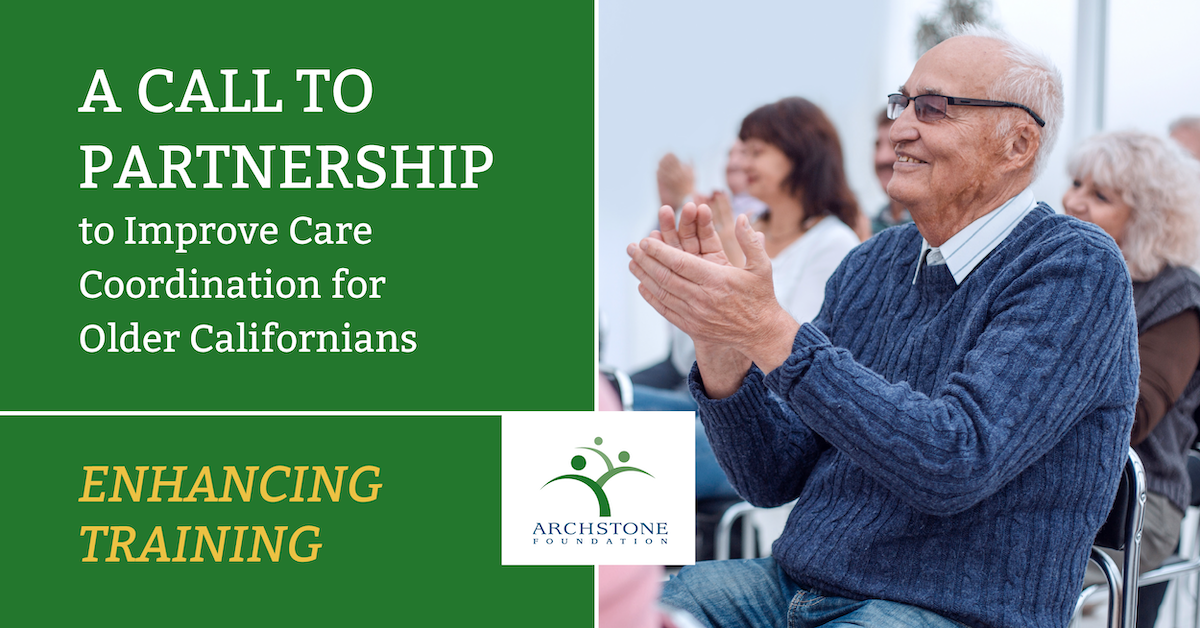
This post is about our Call to Partnership for Enhancing Training. A post on August 7, 2023, was about our strategy for promoting teams, and a future post will be about the importance of improving technology.
Training as a Catalyst for Equity
In the pursuit of improving care for older adults, we must confront the stark reality of persistent racial and ethnic disparities in the health and social services systems they rely on. Older adults of color often experience unequal access to quality care, leading to worse health outcomes. These disparities are a pressing social justice issue that demands our immediate attention.
Improved training plays a key role in shrinking the quality gap in care and reducing racial and ethnic health disparities. Through cultural competence and equity-focused training in healthcare curricula and professional development programs, direct care workers build a strong understanding of equitable care delivery that influences their practice. More of this training is needed, prioritizing the unique needs, perspectives, and experiences of the diverse populations they serve. This results in more older adults from all backgrounds receiving culturally sensitive and inclusive care, and fewer left behind.
A Gateway to Quality Care
Higher quality and quantity of training will bring us closer to achieving comprehensive, efficient, person-centered, and coordinated models of care for older adults. Since the complexity of our care needs increases as we age, health and social service providers must work synergistically. By building cultures that value ongoing training and professional development, care teams improve their ability to learn and adapt to unique challenges presented by shifting older adult needs and systems change. This approach equips professionals and paraprofessionals alike –direct care workers, community health workers, promotores, and care navigators – with the knowledge and skills necessary to deliver exceptional care in a timely manner.
The Role of Team Care
Effective team care is rooted in effective team training. Aging-related care requires a multidisciplinary approach, with professionals from health and social fields collaborating seamlessly. Often, the training for new professionals occurs in the bubble of their own discipline, with little contact with or perspectives of other fields. The system frequently misses the key step of exposing folks to the work of other fields, learning to integrate their own knowledge into holistic care delivery for an individual, and learning to keep patients and their families centered in the process. With the benefits of ongoing training and shared knowledge, care teams will adapt better to the evolving needs of older adults, provide personalized care plans, and create a supportive environment for all involved.
Harnessing Technology for Training
Technology is indispensable to modern healthcare, and its potential to revolutionize training should not be overlooked. Optimizing technology use allows training to be delivered at scale, so it can reach the widest possible audience of professionals and caregivers. Online courses, virtual course modules, and interactive case-based learning platforms can provide accessible and flexible training opportunities that fit the demanding schedules of healthcare professionals, caregivers, and social service providers. Moreover, leveraging technology in training fosters more interdisciplinary and collaborative behavior, helping close gaps among disciplines, and ensuring a holistic approach to care.
Expanding Roles and Collaboration
Training not only enhances skill sets but also opens doors to new and expanded roles. Healthcare professionals equipped with multidisciplinary knowledge can assume leadership positions and contribute to shaping policy, practice, and research in geriatric care. Training also encourages collaboration and promotes a culture of teamwork and shared expertise, where insights are drawn from an array of perspectives. This approach helps create a cohesive care team that can effectively address the complex care needs of older adults.
Funding Principles and Opportunities for Partnership
New models of team care, changing demographics, an increasing need for home-based care, and workforce shortages all create a great need to influence practice and systems change. Archstone Foundation will support projects that train health and social service care teams to work together at their highest level.
We think that important opportunities for future Training grants may come from organizations proposing to:
- Improve care coordination across health and social service providers and settings, with a focus on training that supports such collaboration and advances care integration for older Californians.
- Advance care integration by bringing siloed health and social services together to create a more seamless patient experience, helping providers understand one another, communicate more effectively, and master tools such as new technologies for more effective teamwork.
- Benefit newer team members who are filling gaps in traditional care (including community health workers, promotores, and other direct care workers) and raise awareness of their value among health care providers, creating demand for training through targeted communication with health providers and health systems.
- Support pilot training programs that improve the ability of older adults and caregivers to participate effectively in directing care and being members of their own care teams.
- Increase the capacity of all care team members to address racism, sexism, and ageism and interweave equity and justice principles from program inception.
We hope you will join us as we embrace the transformative power of training, propelling us toward a future where the well-being and dignity of all people remain at the forefront of care and all older adults receive the compassionate and comprehensive care they deserve.
Laura Rath contributed to this post.