Depression care for older adults has seen significant progress in the past three decades. Research has shown, for example, that dramatic improvement in both the effectiveness and cost-effectiveness of treatment comes when primary care physicians are supported by mental health professionals in collaborative care programs.
Despite these advances not enough depressed older adults are getting — or staying with — their treatment to benefit from it. Seeking to close these gaps, Archstone Foundation has long underscored the Teams aspect of its current Three Ts strategy by supporting partnership approaches to improving depression care for older adults. This began in 2014, with a grant to the University of Washington and the University of California-Davis to create the Care Partners initiative.
More recently, Archstone Foundation has awarded three grants for bolstering mental health services for older people to the El Sol Neighborhood Educational Center of San Bernardino. Since 1991, El Sol has been serving vulnerable communities of the Inland Empire — often called the “Third California” to reflect the social, health and economic disparities that distinguish it from other parts of the state. The first grants were to implement a Care Partners program. A 2022 capacity building grant is helping El Sol to identify health care partners who can bill for depression care for older adults and to strengthen its financial sustainability by identifying new sources for earned income through Medi-Cal and Medicare billing.
The Pivot to Relying on Community Health Workers for Depression Care
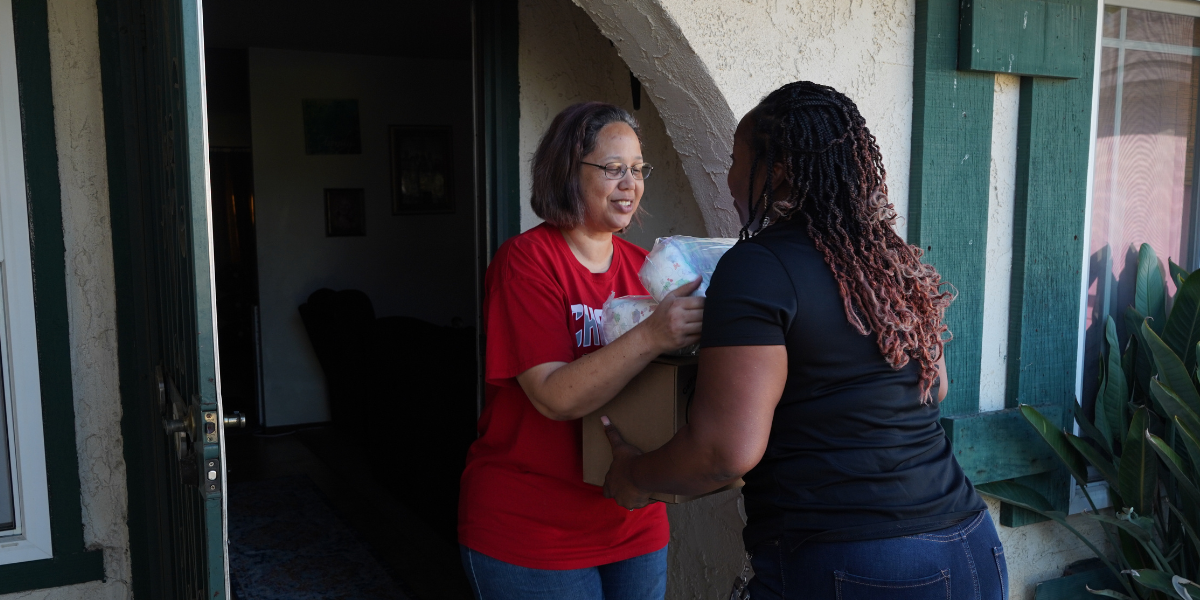
El Sol’s emphasis is serving immigrants and those who speak only Spanish or have limited English proficiency. They are highly skilled at engaging and deploying trained lay workers as community health workers and promotores (CHW/P). To improve depression care for older adults, El Sol first sought to partner with a local community clinic but struggled to solidify that partnership. They then pivoted to utilize CHW/Ps to implement an evidence-based approach - the Program to Encourage Active, Rewarding Lives for Seniors (PEARLS), which focuses on delivering depression care in the home and community.
This proved enormously successful. During the implementation from 2017 to 2020:
- 149 patients were enrolled (with at least one follow-up visit) resulting in 1,467 patient contacts
- 99% completed at least three sessions with a CHW
- 98% achieved at least 50 percent improvement in their score on the PHQ-9 depression assessment.
I recently spoke with Executive Director Alex Fajardo, MCP, CFC, about El Sol’s successful approach. Our discussion has been edited here for clarity and length.
Jasmine Lacsamana: Let’s start at the beginning. Tell us about the initial Care Partners work and the beginning of the PEARLS program.
Alex Fajardo: We started our relationship with Archstone Foundation about 10 years ago as part of the Care Partners work. I love this approach because it integrates and partners with community-based organizations. It is unique. Even though we have a lot of challenges, including with the learning processes and having crucial conversations with partners, we saw the impact of what we were doing through PEARLS to support older adults with depression. We received two grants for the Care Partners project from 2015 to 2020. As a result of this long-term relationship, we can further develop the program based on our impact on the community. Our capacity building grant is helping us explore and leverage some funding to support CHW/Ps and incorporate PEARLS in supporting older adults with the CHW/Ps approach.
JL: Tell us a more about this current capacity building project and how it's going to help grow the mental health approaches that you're trying to implement.
AF: This work starts with developing El Sol’s capacity in terms of new partnerships with clinics, hospitals, and any health care delivery system working with older adults. Second, we are developing our capacity for CHWs by developing training to give them the skills and competencies they need. Also, understanding what the billing system is and how we are going to bill for services. Now we are getting new opportunities through CalAIM and the Medi-Cal expansion. We're exploring what is the best option to serve older adults regarding mental health — how to provide support in terms of all the factors that determine health, including family support, chronic diseases, and navigation to services.
JL: You are providing a variety of services and looking at the whole person, but you can already see the challenge of having to bill for one thing when you're providing many services. How are you addressing that in designing a system to bill through Medi-Cal and Medicare?
AF: One thing I love about CHW and promotores is that, even when they are called to do a home visit for mental health, they end up helping in other ways — taking a holistic approach to care. Because they have the commitment, the passion. During the pandemic, even though they were doing visits to talk about depression, they ended up picking up and dropping off food, delivering mail between family members. The billing system is too structured and can’t be enhanced or changed the way that the community needs.
The main challenge is how to change the system to validate these community-defined efforts and show what’s working to improve health. We have enough data and testimonies about the impact of intervention. That’s the main piece of a bigger picture for a transformation system of a reimbursement model. There are already little pieces that are supporting mental health for the older adult population. Especially with Medicaid expansion, CHWs are able to do some visits, hopefully for chronic disease management and we are aiming to include mental health as well.
We carefully consider the funding we're getting and how this new funding can support our communities, and how we can incorporate it into our operations. All of this new money, on some level, will limit the support for older adults, because they don’t only need mental health support, they need other support that is not covered on the reimbursement models. Many of our participants develop a strong relationship with the promotoras as a friend, and as a trusted community member, not just a representative from an institution who says “I'm here just to give you this class and then I have to leave.” CHWs are seen as part of their community and part of the family.
JL: That's great that you’re focusing what your community members need. Which leads me to ask: What have you learned in training CHWs to also serve as Medi-Cal and Medicare providers?
AF: First, it’s not just about the training. Selecting a CHW/P is super important, finding people who are right fit for the work and really want to do it from their heart. El Sol CHW/P Training Center has developed a structured training process that includes the basic foundations for each CHW/P. It’s critical to incorporate social determinants of health with a lens of social justice as well. The CHW/Ps need to have support from a team of experts that see them as experts as well. A supportive team can develop interventions together for their programs.
That's the critical piece for all who want to incorporate CHW/Ps in their work. They need to look at not only the training, but also what they can provide to help the CHW/P grow and create space for CHW/Ps and leadership to talk and reflect the integration of this model into their agencies. Truly integrating CHW/Ps into the team means incorporating members of the to be part of their care team, to collaborate and create solutions together. It's not just having a CHW/P deliver a service; it is having a CHW/P be part of creating and developing interventions and being viewed as experts.
JL: You are right in the middle of this project. What advice would you give other organizations looking to design systems to be able to bill Medi-Cal and Medicare for their services?
AF: When we began to explore the opportunity of billing for our services, the first thing we did was to make sure the decision-making leadership team is on board. As an agency, we had to ask, “what do we stand for?” The second question was to see if there is a risk of losing our roots as a community-based organization with new funding. The funding is powerful but if it is going to transform and take you away from your roots in the community, be prepared to say no to this funding -- even though you need it. The funding needs to come to support the best practices and the impact that you are having and not change the organization’s mission.
It’s also important to have discussions with managed care plans to figure out what is negotiable and what is non-negotiable. The next part is developing an action plan and creating a step-by-step process to make sure the organization has the capacity, the readiness, the documentation needed, and all the training. It's going to take some time but, in each step, pay attention to if the organization is shifting away from being part of the community. I also recommend talking with other entities that have been doing this kind of partnership with managed care plans. At El Sol, we can share best practices and helpful documents, so others don't need to recreate them. They can learn from our mistakes, too.
JL: Talk to me about opportunities with CalAIM to increase availability and resources to serve older adults in the community.
AF: What I like about CalAIM is the specific structure of the services. For example, in community services, they have specific services for older adults. One big opportunity is that as CalAIM is implementing processes there are a lot of learnings that can be modified to better serve our community.
JL: What are the next steps for El Sol in this process?
AF: We are almost 80 percent done with this project. We are in the process of understanding which billing codes will cover the older adult population for our project. There are some challenges we need to figure out to have it make sense for our participants. We need to be able to bill for services provided and provide services in a way that is still meaningful for the community.
JL: Any other advice you would like to give to organizations looking to do the same process?
AF: Planning is especially important. Community-based organizations need to ask themselves, why do we want to do this? Is because we want to help the community -- or to get another source of income? The reason I'm saying this is because when you are incorporating new funding and if the mission and vision of your organization are not clear when you are incorporating CHWs and transforming your agency, the organization will end up looking more like the health system and not the community. We at El Sol have reflected many times on this and exist to be more like community and part of the community. Having clear principles will maintain and sustain this CHW/P workforce, rooted in the community. We are learning every day on this new opportunity of billing to support our work.
Thank you to Laura Rath and Ryan Doyloo for their contributions to this blog.