
By Patrice L. Dickerson, PhD, Senior Equity Strategy Director, American Society on Aging
At this year’s Grantmakers In Aging (GIA) conference in Long Beach, something extraordinary unfolded. Amid sessions on innovation, systems transformation, and equity, the Leaders of Today & Tomorrow: ASA RISE Remix Luncheon offered a different kind of power—the power of belonging.
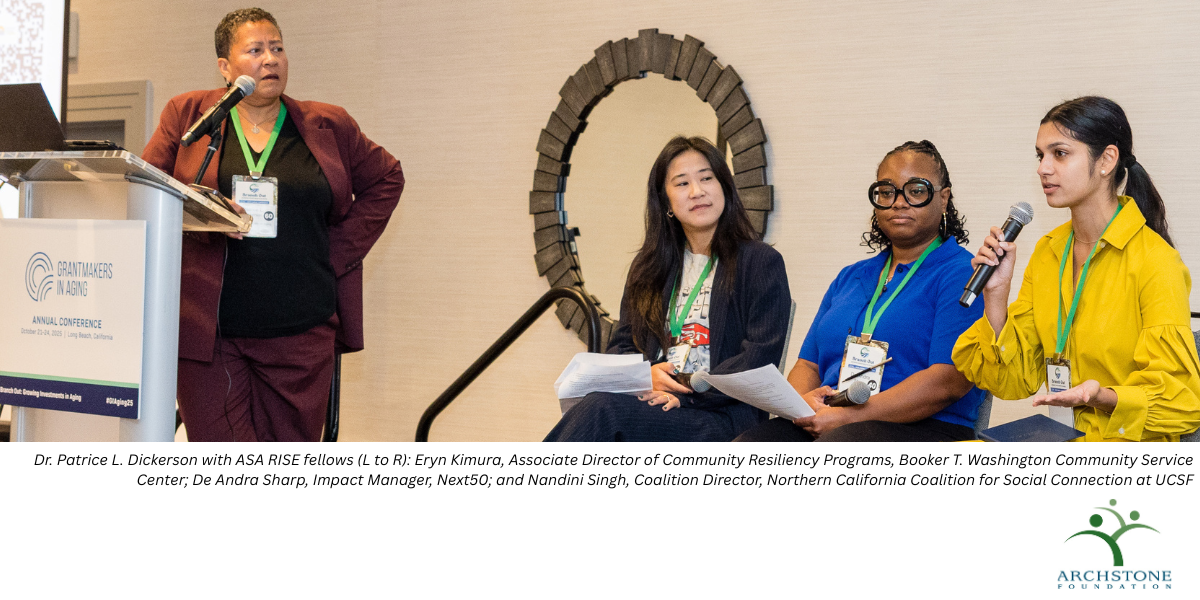
This gathering brought together ASA RISE alumni, philanthropic leaders, and students from local colleges and universities who are exploring careers in aging, health, and social impact. The room was electric: a living bridge between generations, disciplines, and possibilities. It wasn’t a typical conference luncheon; it was a laboratory of belonging in action.
A New Generation of Leadership
ASA RISE was founded on a belief that the future of the aging sector depends on who leads—and how they lead. The fellowship develops emerging leaders of color who are reshaping policy, practice, and research through an equity-centered lens. They come as advocates, scholars, and service providers; they leave as movement builders, connectors, and system disruptors.
At the luncheon, ASA RISE alumni took to the stage and shared their vision for creating a culture of belonging where everyone has a role in shaping systems that truly work for all older adults. And they shared the room not just with funders, but with students from institutions like USC, San Diego State University, UCLA, and California State University–Long Beach. For many of those students, it was their first time meeting professionals who looked like them—and who were leading the national conversation on aging and equity.
They didn’t just see leaders—they saw a possible future.
Belonging as a Philanthropic Imperative
Belonging is not a soft value; it’s a structural one. It determines who gets funded, whose ideas take root, and whose wisdom shapes the field.
Philanthropy often talks about “pipeline development,” but belonging pushes us to think differently: it’s not about fixing people to fit systems; it’s about reshaping systems to reflect people. It’s about creating environments where students, fellows, and funders can imagine shared ownership of the future of aging.
When funders and fellows sat beside undergraduate students at the luncheon, they didn’t just share a meal—they shared vision and responsibility. The conversation flowed from personal journeys to structural change, from the challenge of representation to the joy of recognition.
Philanthropy’s Role in Building Belonging
Philanthropy has the power—and the responsibility—to make belonging tangible:
• Invest in Leadership Pipelines: Fund programs like ASA RISE that build sustained, equity-centered pathways for students and professionals of color in the aging sector.
• Fund Access and Exposure: Support initiatives that connect local students to national conferences, professional networks, and mentors in aging.
• Resource Narrative Change: Uplift the stories and experiences of younger and older leaders who are redefining what it means to age—and lead—with dignity and purpose.
A Moment that Mattered
When I landed in Long Beach the day before the luncheon, I expected to see familiar faces—our ASA RISE Village consisting of alumni, funders, mentors and colleagues. What I didn’t expect was the response following the luncheon from students and early career professionals who said, “I didn’t know aging could look like this.”
That’s belonging: the moment someone sees themselves in a space that wasn’t built with them in mind. It’s what happens when philanthropy opens its doors wide enough for the next generation to walk in.
The Future We’re Building
As ASA looks toward the On Aging 2026 conference—appropriately themed The Power of Belonging—the GIA luncheon reminds us that belonging isn’t a destination; it’s a practice. It’s what we build when we bring students, emerging leaders, and funders into a shared vision of justice and joy in aging.
The Leaders of Today & Tomorrow Luncheon wasn’t just a networking event. It was a declaration: the future of aging will be multigenerational, multicultural, and equity-centered—or it will not be sustainable.
In that meeting room in Long Beach, belonging became visible.
And that visibility is the beginning of transformation.

