
Co-written with John Beilenson, President, SCP, and member of the National Advisory Committee of the Reframing Aging Initiative.
For almost 12 months, we’ve known that COVID-19 was bad for lots of us, but that it was really bad for those of us who are older and with underlying health conditions like heart disease and diabetes. We now know that more than 80% of the nearly 500,000 people who have since died from the coronavirus in this country have been 65 and older. And according to the CDC, we also know that older people of color have been particularly hard hit — hospitalized at three times the rate and dying at twice the rate as their white peers.
Our public policy response continues to be debated, but underlying these actions (and inactions) has been a set of ageist ideas that directly and indirectly devalue older people.
It wasn’t long after COVID entered our lives last year, that eruptions of explicit ageism — discrimination against a person or group of people based on their age — found its way into the media and social media. We saw things like “Boomer Remover” memes, implying the pandemic was a useful way to cull the post-World War II generation. There were triage policies that made age a criterion for limiting or denying care. There was the Lieutenant Governor of Texas, Dan Patrick, saying publicly that grandparents would be “willing to die to save the economy for their grandchildren.” There was the massive underinvestment in providing nursing homes with the personal protective equipment (PPE) and testing they needed (and continue to need) to prevent older residents (and staff) from succumbing to COVID.
Ageism … out in the open in broad daylight.
Aging advocates objected, and while policy actions and accompanying appropriations did not change, the public rhetoric softened. Ageism in the age of COVID-19 didn’t disappear, it mutated. It could be found in underlying discussions of COVID-19 fatigue, the desire in many places to “get back to normal,” to be able to go to bars and restaurants once again, gather in movie theaters, at concerts and sporting events. It could be found lurking beneath the videos of angry “mask deniers,” who refused to cover up in stores or other public spaces.
These messages and actions were often framed as expressions of a uniquely American sense of individual freedom or anti-science bias. They were also unconsciously reflecting age (and in many cases race and class) prejudice. Ageism, like other forms of discrimination, can operate all too effectively in the shadows.
Certain behaviors and points of view may not explicitly demean us as we age, but the downstream and negative effects of this discourse ultimately have fallen on older people and particularly older people of color. Many have been stuck for months in draconian lockdowns of skilled nursing facilities and other congregate care sites. So many others — our older family members, friends, us — have been hospitalized or died.
Almost everyone has a story to share. Here is just one of them.
Jolene’s Story
COVID nearly wiped out a generation in my family. Before COVID-19, my Aunt Irene, who was 84, visited her husband (my Uncle Gene) of 63 years, almost every day at the care center (nursing home) in Iowa. When he got COVID and was isolated, my Aunt Irene reminisced with him by phone about his favorite things. He died on December 3, 2020. He was 86 years old. Around the same time, Irene also contracted COVID. She died just nine days later.
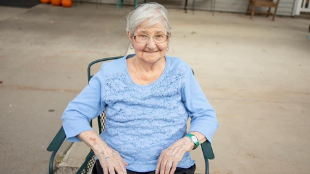
My Aunt Kathleen, pictured above, was 93 when she got COVID-19. The last time I saw her was on Zoom. Kathleen was “lucky.” The hospital was planning to discharge her to the local Care Center, where she could likely have died alone. With some coaching from my cousin, she was discharged to her granddaughter’s home, who had recently recovered from COVID herself. Aunt Kathleen died several days later on November 16, thankfully with part of her family by her side — a family that includes six children, 15 grandchildren, and 24 great grandchildren.
My Uncle John survived COVID. Two of his five daughters are nurses. When he got sick, they made sure he was hospitalized immediately, and he later recovered in his daughter’s home.
My Aunt Dixie now spends most of her time alone at home. She has seen what COVID has done to our family and anxiously awaits her vaccine.
Taking a Hard Look at Unconscious Biases
The effects of COVID are heartbreaking and they are real. Our unwillingness as a nation to address our implicit biases about our aging has had tragic consequences.
During the past year, a more age-positive perspective and associated messaging could have driven real policy and practice investments and prevented some of our suffering. Indeed, the approach to the newly available vaccinations has placed older people closer to the front of the line, not because we are more deserving as we get older, but because we are just as deserving as anyone else and among those most at risk. This suggests progress.
No matter our age, we all should have the right, the ability to participate fully in our communities and our nation. As we have learned through the pandemic, ageism — sometimes explicit, often implicit — leads to a variety of bad outcomes for older people’s health and well-being. These attitudes demean us as we age. They threaten our health, and the policies they support can exclude us from family, work, and other activities. Going forward, we would do well to take a hard look at our unconscious biases as we seek the solutions, policies, and programs that improve everyone’s health and well-being.


Comments
I have been discriminated against a lot of times for my age and was the victim of old jokes at work. I mean it didn’t bother me as much, but at times it did annoy me or made me feel…old. Ageism is def a thing and I am glad people are talking about it more so it can be corrected. I read this, https://www.ez.insure/landing/2021/12/is-ageism-killing-us/ and it has some great stats about it as well as how to deal with it. What do you think? I think employers should do better training and more about it so it is prevented.
Dear Sharon,
I am sorry you have experienced ageism. I know how painful it can be.
Ageism is an interesting “ism”. It’s the only prejudice that targets our future selves. It also has wide-ranging consequences for people’s health and well-being. It’s associated with poorer physical and mental health, increased isolation and loneliness, and decreased quality of life, among other things.
Archstone Foundation has funded, and is currently funding, efforts to reframe aging. To learn more about our funding to address ageism, please refer to Frameworks Institute [https://www.frameworksinstitute.org/issues/aging/] and The Gerontological Society of America [https://www.reframingaging.org/].
Whereas, there have been bad outcomes for older adults, the pandemic has brought more attention to care communities and elders. SpiritCare Ministry to Seniors has seen more people wanting to help older adults than in normal times. So I believe there is more interest in helping the elderly now than in the past.
Thank you for sharing the kindness you are seeing at SpiritCare Ministry to Seniors. We hope the support for older adults will continue beyond the pandemic and that more good will continue to come from it. Thank you for the work you do.
Thank you for sharing your story with us, Jolene, and my sympathies to you for your many losses. We plan to feature this excellent blog in Caravan, the newsletter of the Reframing Aging Initiative. I liked especially this line: “we are just as deserving as anyone else.” Take care.
Laurie, thank you for your kind words and for all that you do on behalf of The Gerontological Society of America and the Reframing Aging Initiative. Caravan is a great tool to get the word out, and the work to be done, on reframing aging so we can all live in a just and fair society.
Hi Jolene,
Thank you for this article. We have been frustrated by the poor pandemic response of the federal and many state governments. Like you, we feel that if those who are dying are younger and whiter, the response would be much different.
We are a start-up developing Coached Self-Care, an integrated suite of personalized preventive care services, to help older adults with chronic conditions stay healthier and age in place longer, as well as simplify and amplify the role caregivers can play. We are a for-profit, so we don’t qualify for your grant process. However, I would like to talk with you and get your feedback on what we are doing.
We listen to the GeriPal podcast all the time and have made some great contacts as a result of it. We are actually scheduled to have a call with Alex and Eric in March. We appreciate the work that Archstone is doing on behalf of older adults.
If you have time for a call, please let me know a couple of dates/times that work for you.
Thanks,
Dave Dlesk
CEO & Co-Founder
Carefree Chronic Care
978-621-9870
davedlesk@carefreepharmacy.com
http://www.CarefreeChronicCare.com
Dave Dlesk - Thank you for your comment and for your dedication to older people.
I am so glad to hear that you are a fan of GeriPal. It’s a wonderful podcast/blog and Archstone Foundation is proud to support it. I have reached out to you via LinkedIn. I look forward to hearing back from you.
Jolene, Thank you for this powerful article keeping our attention on older adults extremely high COVID risk factor. It is timely as states develop differential strategies for COVID inoculation. Underlying ageism continues to be at work both in prioritizing targeted populations and in vaccination access procedures.
I am sending your piece to a colleague in Oregon with Age+ that is advocating for equitable state policy and process for older people vaccination. This morning their local newspaper presents the challenge
https://www.oregonlive.com/news/2021/02/bumpiest-rollout-yet-portland-area-seniors-run-into-big-problems-signing-up-for-covid-vaccine-appointments-monday.html
Your sharing of the personal, intergenerational impact of COVID is a poignant reminder of elder’s vulnerability and its impact on families. I send heartfelt condolences to you and your family.
JoAnn Damron Rodriguez.
Dear JoAnn - Thank you for forwarding on our blog to others, and in particular colleagues who are advocating for equitable policies and processes for older people and vaccinations. My story is one of so many. I am grateful for having the opportunity to share it with others.
I’m sorry for all your losses Jolene . Your article is right on. It is sad to see the intergenerational fights resurface as well as ageism.
May we someday learn.
Nice job.
Kathy Sykes - it means our work is not done! And so we continue…And may we one day learn!
Thank you for this thoughtful piece on ageism and Covid. I read this tearfully as we reach over 500,000 deaths in the U.S. Thank you Jolene!
Dina
Dina - thank you for your kind words, your compassion, and all you do on behalf of older people in Long Beach.